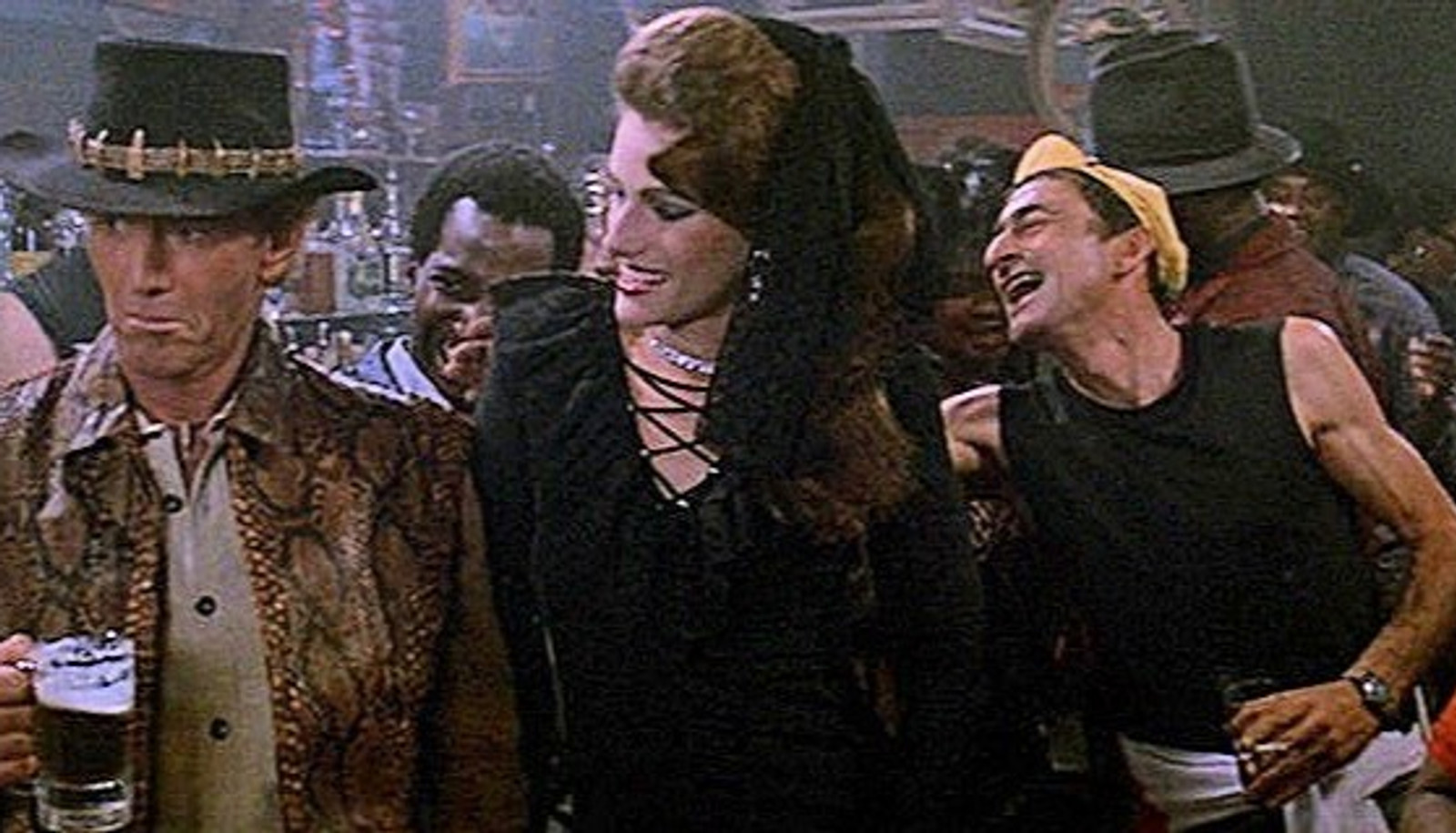
Mick got the heads up just in time. Image credit: Crocodile Dundee (1986).
When investors understand a fund's process, exposures and risks from the outset, expectations stay aligned and surprises become less likely.
In Crocodile Dundee, there is that memorable moment at the bar where Mick realises, with a helpful heads up, that things are not quite as they first appeared. A good reminder that looks can be deceiving.
In investing, the same holds true. Attractive returns and polished marketing can draw attention, but unless you understand the process and risks behind them, surprises can follow. Clarity at the start prevents disappointment later because not everyone is lucky enough to get a warning like Mick did.
When an investor understands how a fund invests, what it owns and how it manages risk, the inevitable ups and downs of markets feel less like shocks and more like part of the plan. When that understanding is missing, even routine volatility can feel like a breach of trust.
Too often, portfolios are built around reputation, brand or headline performance rather than a clear grasp of the process that produces those results. The label becomes familiar, but the engine beneath it is rarely explored. That is where misunderstandings begin and where disappointment often follows.
Understanding what you own means knowing how the investment process works, what decisions drive portfolio changes, how liquidity is managed and where the real risks sit. It means being able to explain those elements in simple, confident terms. That clarity creates shared expectations between managers, advisers and investors.
Last week in The Australian Financial Review, James Thomson wrote in Chanticleer about the growing unease in global credit markets. He captured it perfectly: the sense that investors are beginning to question what lies beneath a decade of rapid growth in private credit.
Jamie Dimon at JPMorgan warned that when one problem appears, others are usually waiting. Apollo's Marc Rowan reflected that the desire to win in competitive markets can sometimes lead to shortcuts. Reminders that even sophisticated investors are not immune to the risks that come from opacity.
These are not fringe stories. They show how uncertainty grows when investors do not fully understand how money is being lent, valued or risk managed. The lesson is not about private credit alone. It is about transparency and the need for investors to understand the process, not just the promise.
Closer to home, Lucas Baird reported in the AFR on the Shield and First Guardian scandals and the questions they raised about oversight and governance. ASIC’s findings revealed that even professional trustees and platforms relied too heavily on external ratings rather than deep understanding of the underlying products. Investors were left exposed, not only to losses, but to uncertainty about what had actually happened to their money.
The common thread across these stories is the same. For advisers, clarity about a fund's process and exposures is what allows them to manage conversations with confidence, especially when markets move against them. For investors, that same clarity allows patience and conviction to replace worry. When everyone understands what drives returns and where the risks lie, trust endures.
The best investment relationships are built on shared understanding. The manager explains the process openly. The adviser communicates it clearly. The investor believes it fully. That alignment is what keeps expectations realistic and reactions measured when conditions change.
Clarity is not about marketing. It is about stewardship. It respects the capital entrusted to a manager and the confidence placed by an adviser and client.
Mick was lucky enough to get a warning before things went wrong. Investors rarely do. That is why understanding how a fund really works is the best kind of heads up. It keeps surprises to a minimum and trust intact.